
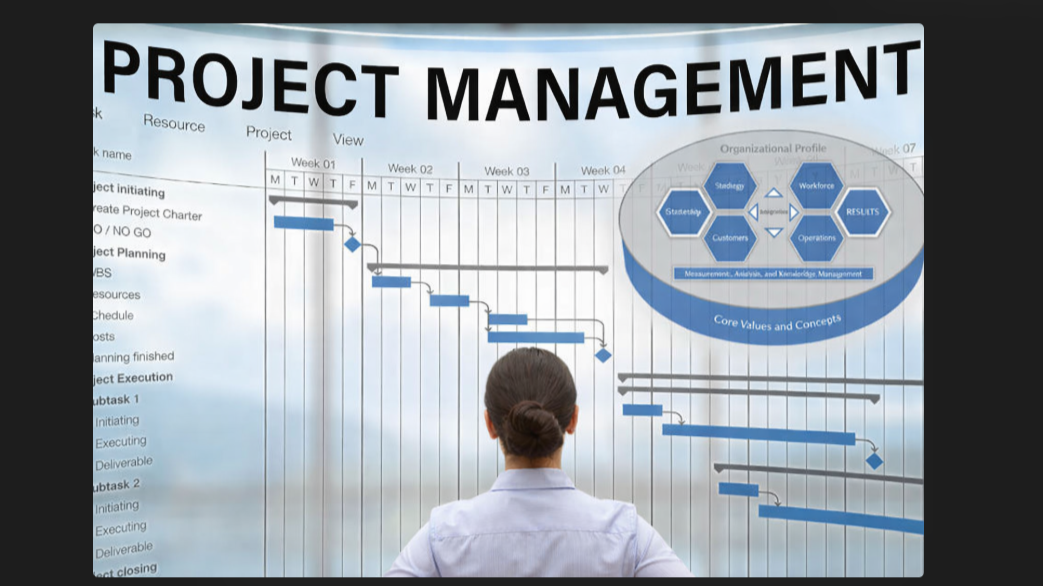
In high-velocity commercial markets, the gap between strategic ambition and operational execution determines whether an enterprise thrives or fails. Executive leadership teams routinely formulate compelling growth strategies, launch innovative product concepts, and fund complex operational transformations. However, a brilliant strategy carries zero intrinsic commercial worth until it is executed successfully in the real world.
The true value of any business initiative is tied directly to timing. Delivering a state-of-the-art technological platform, a revolutionary software product, or an upgraded supply chain network six months after a competitor captures market share drastically diminishes financial returns. Strategic project management serves as the primary governance engine that transforms executive vision into tangible business value, ensuring that complex initiatives reach the market within the operational window necessary to maximize return on investment.
Redefining Project Success Beyond the Traditional Triple Constraint
For decades, traditional project management evaluated success through a narrow operational lens known as the triple constraint: delivering within approved scope, on schedule, and under budget. While monitoring time, cost, and deliverables remains essential for financial control, completing a project within budget is a failure if the final deliverable fails to generate meaningful commercial impact.
Modern project management shifts the organizational focus from technical output to business outcome. This evolution requires evaluating project health across several strategic dimensions:
-
Return on Investment and Financial Payback: Tracking whether project deliverables achieve targeted revenue growth, operating margin expansion, or capital expense reduction.
-
Customer Adoption and Satisfaction Metrics: Measuring whether the project output solves actual user pain points and achieves targeted net promoter scores or user retention rates.
-
Operational Efficiency Gains: Verifying that internal process overhauls eliminate workflow friction, reduce manual rework, and shorten cycle times.
-
Strategic Market Alignment: Ensuring that project deliverables actively advance the long-term competitive positioning of the enterprise.
By focusing on outcomes rather than isolated deliverables, project managers ensure that every task completed directly supports organizational growth goals.
Core Mechanisms Driving On-Time Value Delivery
Timely execution rarely occurs by accident. Complex corporate initiatives involve hundreds of interdependent tasks, distributed team structures, and competing priorities. Project management provides the disciplined framework required to maintain schedule integrity without sacrificing output quality.
1. Rigorous Dependency Mapping and Critical Path Analysis
Every complex initiative contains a sequence of dependent tasks that dictate the absolute minimum time required to complete the effort. Project managers utilize critical path analysis to map these interdependencies explicitly. By identifying bottleneck activities early, project leaders allocate resources strategically, ensuring that non-critical delays do not push back the primary launch date.
2. Proactive Risk Identification and Mitigation
Unforeseen risks, such as technical integration failures, vendor delays, regulatory shifts, or key personnel turnovers, represent the primary cause of project schedule slippage. Strategic project managers conduct comprehensive risk workshops during the initial planning phase. They assign risk severity scores, track early warning indicators, and build pre-funded contingency reserves. When obstacles emerge, pre-approved mitigation workflows are executed immediately, preventing minor issues from escalating into project-halting crises.
3. Disciplined Scope Management and Change Control
Uncontrolled expansion of project scope, commonly referred to as scope creep, is a major driver of project budget overruns and schedule delays. As projects progress, stakeholders often request additional features, customized design elements, or expanded functionality. Project management establishes formal change control boards to evaluate proposed scope additions. Requests are evaluated based on their impact on delivery timelines, budget limits, and baseline return on investment, ensuring that minor enhancements never compromise hard market release dates.
4. Dynamic Capacity Planning and Resource Optimization
Committing resources beyond reasonable capacity causes team burnout, increased defect rates, and catastrophic project delays. Project management platforms track real-time resource utilization across functional departments. By forecasting resource requirements accurately, project leaders reallocate workload balances dynamically, resolve cross-departmental resource contention, and maintain sustainable team velocity throughout the project lifecycle.
Matching Methodologies to Market Uncertainty
Delivering on-time business value requires selecting a project management methodology that matches the specific operational risk profile of the initiative. Applying a rigid, sequential planning framework to a fast-evolving digital market creates friction, just as applying loose, open-ended development sprints to a regulated construction project introduces compliance risk.
Predictive Frameworks for Stable Environments
When project requirements are well understood, regulatory standards are fixed, and technical execution risks are low, predictive methodologies such as Waterfall provide unmatched structure. Highly structured baseline plans, clear stage-gate approvals, and strict milestone tracking ensure that large-scale infrastructure deployment, hardware manufacturing, and enterprise enterprise software upgrades proceed systematically toward a predictable completion date.
Adaptive Frameworks for High-Uncertainty Markets
In markets characterized by changing customer demands, disruptive technologies, and evolving competitive landscapes, adaptive methodologies like Agile and Scrum excel. Rather than holding value back until the final end date of a multi-year project, adaptive project management structures execution into short production sprints. Teams deliver functional increments of value continuously, allowing the business to capture early feedback, validate assumptions, and pivot operational direction without incurring major financial loss.
Incremental Value Realization Strategies
Modern enterprise project management increasingly utilizes hybrid delivery models centered on incremental value release. Instead of waiting for a complete platform overhaul, project managers release a Minimum Viable Product to generate immediate operational benefits. Subsequent feature additions are deployed in scheduled phases, allowing the organization to achieve revenue or cost-savings benefits months before the overall program reaches final completion.
Best Practices for Leadership Alignment and Execution
To maximize the strategic impact of project management across the enterprise, executive leaders should implement several foundational practices:
-
Establish a Dedicated Project Management Office: Centralize project oversight to standardize governance, unify reporting formats, and ensure consistent execution methodology across all corporate business units.
-
Align Project Key Performance Indicators with Corporate Strategy: Ensure every funded project maintains a clear line of sight to high-level strategic objectives, terminating projects whose business case is no longer viable.
-
Shorten Reporting Cadences: Implement automated visual dashboards that provide real-time visibility into project health, resource bottlenecks, and milestone risks for executive decision-makers.
-
Foster a Culture of Transparent Communication: Encourage project managers to report execution friction, risk escalations, and schedule variances early without fear of organizational reprisal.
Building mature project management capabilities equips an enterprise to execute strategic pivots quickly, optimize resource allocations, and consistently deliver market value on schedule.
Frequently Asked Questions
What is the primary difference between project management and program management?
Project management focuses on delivering a specific, single output or deliverable within defined constraints of time, cost, and scope. Program management oversees a coordinated portfolio of related projects designed to achieve broader strategic business outcomes that could not be achieved by managing the individual projects independently.
How does project management prevent budget overruns in complex corporate initiatives?
Project management prevents budget overruns by establishing detailed baseline cost estimates, tracking actual spending against forecast baselines in real time, implementing earned value management techniques, and enforcing strict change control procedures that prevent unbudgeted scope additions from inflating expenses.
Why do projects with clear strategy often fail during operational execution?
Projects with clear strategy frequently fail due to poor governance, unmapped task dependencies, ambiguous accountability among cross-functional teams, inadequate resource allocation, unrealistic delivery schedules, and a lack of active executive sponsorship during crucial decision-making phases.
How can a company determine if a project should be terminated before completion?
A project should be terminated early if a formal business case review demonstrates that market conditions, technological shifts, or cost overruns have eliminated the expected return on investment. Terminating non-viable projects preserves organizational capital and frees talent for higher-priority initiatives.
What role does change management play in delivering business value through projects?
Change management ensures that end users adopt and effectively utilize the new tools, systems, or processes delivered by a project. A project delivered on time and within budget generates zero business value if internal staff or external customers refuse to adopt the new solution.
How does a Project Management Office improve enterprise execution velocity?
A Project Management Office improves execution velocity by eliminating duplicate workflows, standardizing toolsets, optimizing cross-project resource allocation, providing clear escalation channels for risks, and applying proven delivery frameworks across all operational divisions.
What metrics best demonstrate the value of project management to C-suite executives?
The metrics that resonate most with executive leadership include baseline schedule variance, budget variance control, portfolio return on investment, on-time milestone achievement rate, resource utilization efficiency, and the speed at which completed deliverables generate projected revenue or cost savings.